
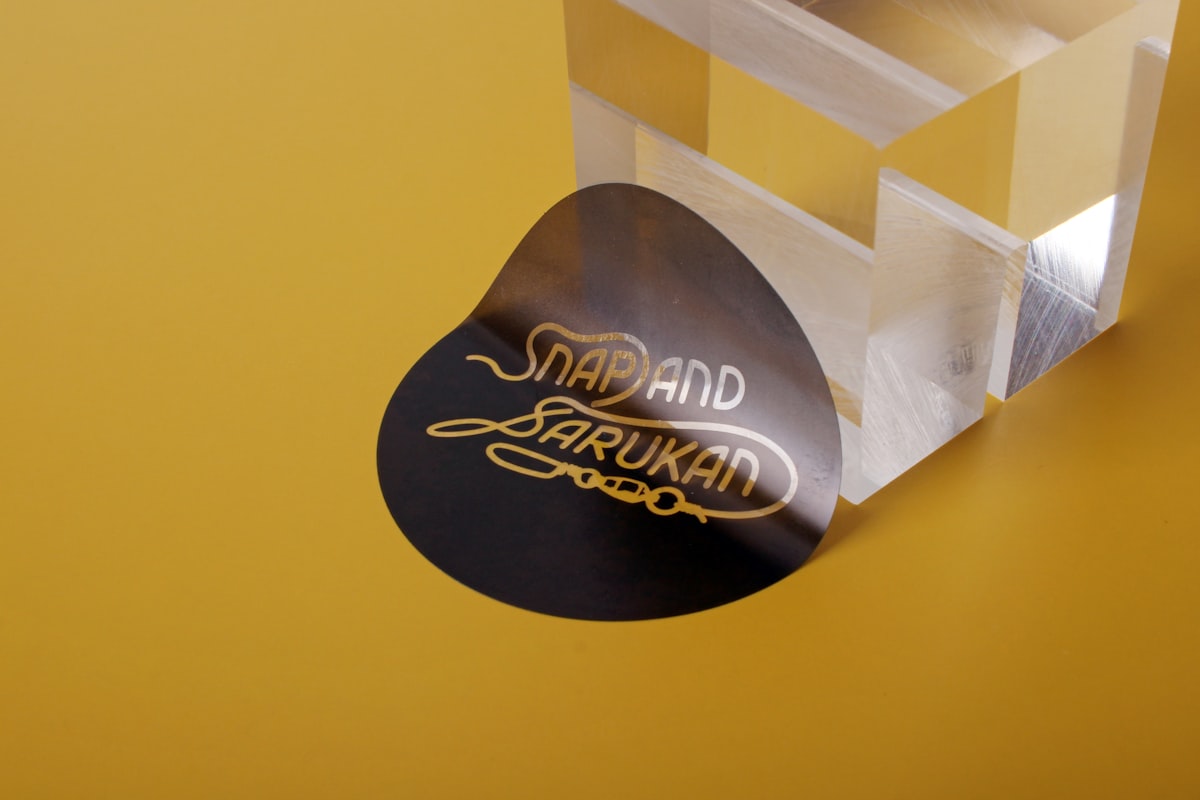
A UV varnish cures in a fraction of a second — as the web passes under a UV lamp inline on the press, liquid coating flashes to a hardened film almost instantly, which is how a finish gets added without slowing the run.
After the ink is down, most labels get one more thing: a protective finish. The two workhorses are UV varnish and lamination, and they're easy to confuse because both make a label look more finished and survive longer. But they're built differently, cost differently, and solve different problems. Choosing the wrong one either wastes money or leaves your label under-protected on the shelf.
What each one actually is
A UV varnish is a thin liquid coating applied over the print and cured instantly by ultraviolet light, right inline on the press. It adds almost no thickness — it's measured in microns — and it locks the ink down, adds gloss or matte, and shrugs off everyday handling and light moisture.
Lamination is different: it bonds a separate clear film over the entire printed surface. You're adding a whole second layer, which is why a laminated label is noticeably thicker and tougher. That film takes the abuse — scuffing, scraping, chemicals, prolonged moisture — instead of your print.
How to choose
- Everyday retail and pantry products → UV varnish. It protects the print, controls the sheen, and costs less. For most prime labels this is all you need.
- Heavy handling, friction, or abrasion → lamination. Think products dragged across shelves, stacked in bins, or gripped with oily hands.
- Chemical or solvent exposure → lamination. Cleaning products, automotive, industrial containers wiped down with solvents survive far better under film.
- Prolonged wet or refrigerated contact → lamination, or UV varnish on a film facestock. Condensation over days beats a paper-and-varnish label.
- Pure look-and-feel → either. A matte varnish gives a soft, natural touch cheaply; a matte laminate gives a richer, more premium hand feel at higher cost.
Gloss, matte, and the feel in the hand
Both finishes come in gloss and matte, and the choice is as much about brand feel as protection. Gloss makes colors pop and reads vibrant and clean — good for food, beverage, and bright consumer packaging. Matte reads understated and premium, and diffuses glare so text stays easy to read; it suits natural, artisanal, and high-end lines. A matte laminate in particular gives that soft-touch, velvety feel buyers associate with premium products — a tactile cue a thin varnish can't fully match.
The cost tradeoff, plainly
UV varnish is the economical default: it's a coating, applied inline, adding little to the run. Lamination adds a second material and a lamination pass, so it costs more per label — sometimes meaningfully at volume. The right way to decide isn't to reach for the toughest finish by default; it's to match the finish to what the label will actually endure. Over-laminating a dry pantry product wastes money on protection it never uses. Under-protecting a solvent-wiped industrial label costs far more when it fails in the field.
Tell your supplier where the label lives — the shelf, the freezer, the warehouse, the workshop — and what touches it. GL Labels finishes labels in-house with both UV varnish (gloss and matte) and film lamination, so the recommendation comes down to your product's real-world use, not what's easiest to run.
Put this into practice
Configure your exact spec — size, material, colors, quantity — and see a budget estimate in about 2 minutes. A specialist confirms final pricing within one business day.